
Saudi Arabia Pavilion marks closing of The Um Slaim School: An Architecture of Connection with second publication, final public program session
 Images Courtesy of the Architecture and Design Commission, the Commissioner for the National Pavilion of Saudi Arabia
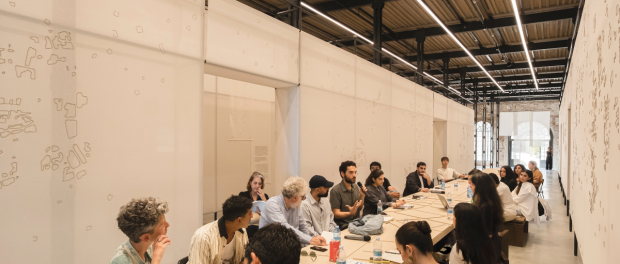
The National Pavilion of Saudi Arabia at the Biennale Architettura 2025, titled The Um Slaim School: An Architecture of Connection, closed its doors after a six-month run in Venice, from May 10 to November 23, 2025.
The exhibition, commissioned by the Architecture and Design Commission concluded with a final iteration of the pavilion’s public program and the release of a new publication, Connections as Method: Relational Pedagogies and Participatory Spatial Practice, that traces the first year of school and its transnational alliances, case studies, and thematics to challenge established architectural canons and center alternative spatial histories and material practices.
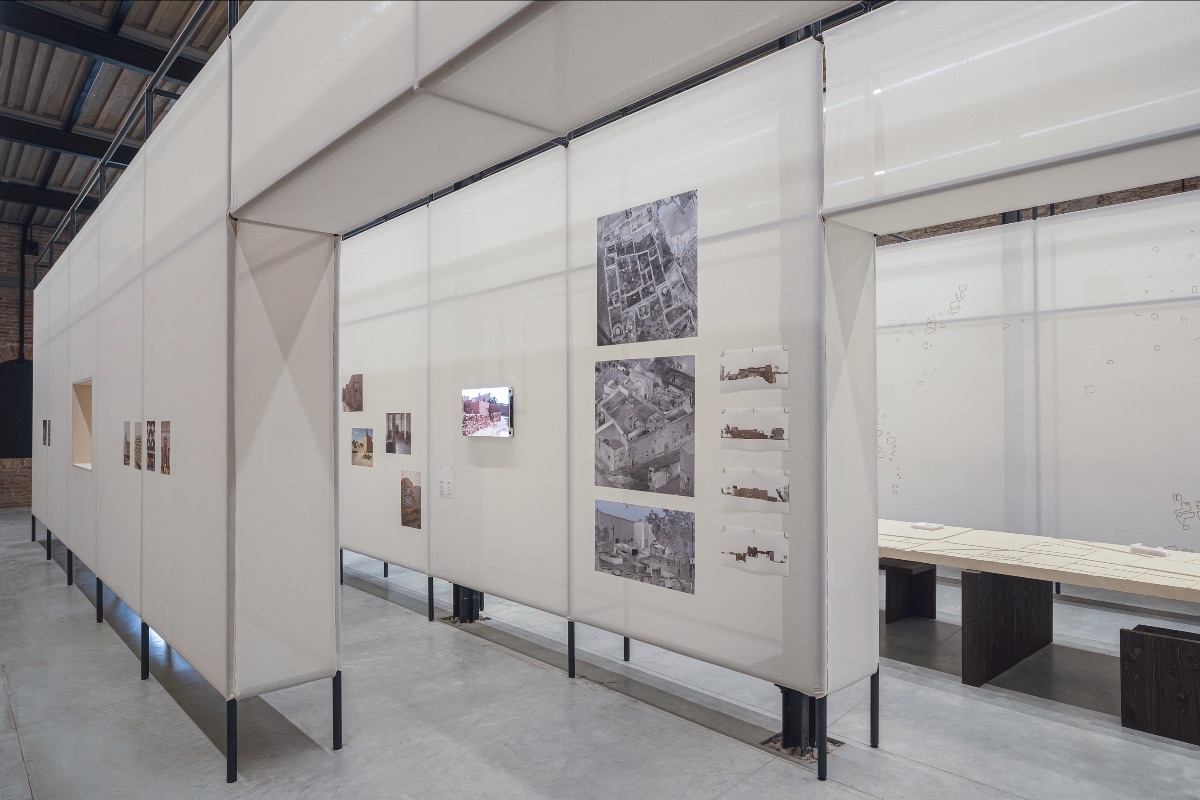
The National Pavilion of Saudi Arabia presented the work of Syn Architects (Sara Alissa and Nojoud Alsudairi), as curated by Beatrice Leanza with assistant curator Sara Almutlaq. Alongside new commissions, the exhibition showcased the practice’s work in documenting and researching local Najdi architecture in Riyadh through the Um Slaim Collective, an interdisciplinary, Riyadh-based initiative launched in 2021. The project was conceptualized as a framework for a future pedagogy to be realized in Riyadh after the Biennale Architettura 2025, establishing new connections between traditional building practices and urgent questions of today. It was constituted of three integral components: the exhibition presented inside the pavilion; a generative public program titled BUILT/UNBUILT — Relational Pedagogies and Participatory Spatial Practice, curated by Beatrice Leanza and Maryam AlNoaimi; and two publications: the eponymous exhibition catalogue, and Connections as Method: Relational Pedagogies and Participatory Spatial Practice, both published by Mousse Publishing and Kaph Books.
Images Courtesy of the Architecture and Design Commission, the Commissioner for the National Pavilion of Saudi Arabia
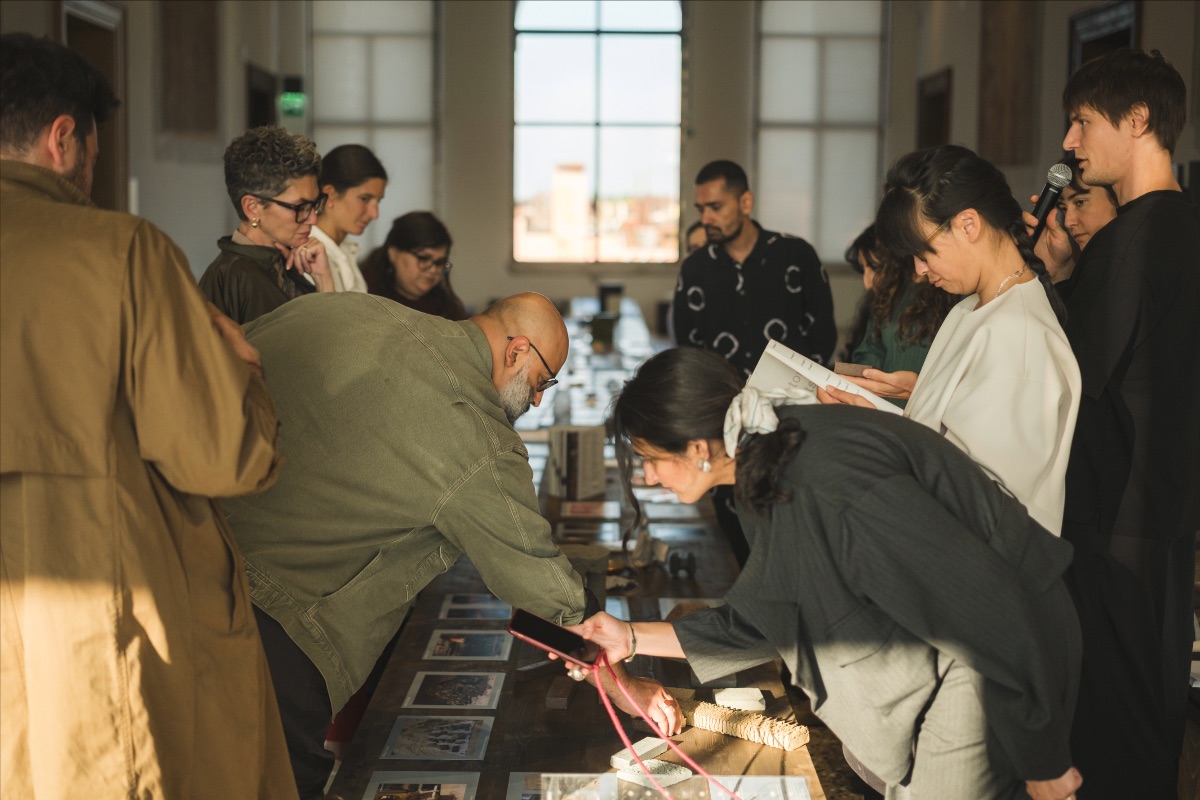
The fourth and final BUILT/UNBUILT session took place on November 23, 2025, at the Saudi Pavilion. Titled Building Participatory Infrastructures — Hyperlocal Practices and Connective Organizations, it brought key protagonists of the pavilion and the regional cultural landscape into conversation, including Syn Architects, architect Noura Al-Sayeh Holtrop, and writer and curator Shumon Basar.
The event concluded a series of laboratorial and public sessions held at the Saudi Pavilion and Palazzo Diedo, the headquarters of Berggruen Arts & Culture. The program began with a two-day ideation gathering in Riyadh in February 2025 and continued over the duration of the Biennale, convening more than forty practitioners from the MENA region and beyond around three thematic investigations:Archiving Otherwise – Cocreating Public Archives and Collective Knowledge; Material Ecologies – Material Heritage and Rituals of Mitigation, Repair, and Reuse; and Pedagogies of Proximity and Relation – Prototyping Alternative Education. These subjects were collaboratively explored to produce insights, methods, and research subjects stemming from the situated cultures and conditions of the Arab Gulf and its adjacencies in service of designing foundational blueprints for the future school.
Images Courtesy of the Architecture and Design Commission, the Commissioner for the National Pavilion of Saudi Arabia
This final gathering also marked the release of Connections as Method: Relational Pedagogies and Participatory Spatial Practice. This volume is the second under the project umbrella. It complements The Um Slaim School: An Architecture of Connection, the inaugural publication documenting Syn Architects’ foundational research and proposing a localized spatial discourse. Connections as Method, the new volume co-published by Mousse Publishing and Kaph Books, draws from the BUILT/UNBUILT’s thematic chapters and features visual and theoretical essays, conversations, fieldwork, and tooling curricula from over 60 international contributors, including architects, designers, artists, educators, urbanists, and writers. These participations pilot methodologies of knowledge exchange to establish South-South networks of coproduction across disciplinary boundaries. Tracing transnational alliances, case studies, and thematics from the school’s first year, the volume challenges established architectural canons by centering alternative spatial histories and material practices while addressing urgent ecological and social concerns.
Sara Alissa and Nojoud Alsudairi of Syn Architects said: “When we founded the Um Slaim Collective, we were rooted in the belief that architecture’s future emerges from the convergence of diverse voices and disciplines. At the core of The Um Slaim School lies a commitment to recalibrating the relationship between architecture, its practice, and the voices that shape our built environment—proposed in the exhibition as a congregational table. Across the first year of the school, conversations and exchanges have reimagined how architects, educators, and communities can cultivate new approaches. We look forward to future work emerging from the Um Slaim neighborhood with this new network of collaborators.”
Beatrice Leanza, curator, said: “The Um Slaim School is a collective prototype of both method and practice that commingles pedagogical, research-focused, and collaborative engagement with the convolute and constantly evolving conditions of the ‘present’. I am eager to see its networks consolidating across globally resonant contexts where new generations of designers are building with community and purpose at heart.”