
A Sanctuary of Light and Layered Materiality Reshapes the Contemporary workspace in East London as Tabitha Isobel Collaborates with Studio Multi on Conductor
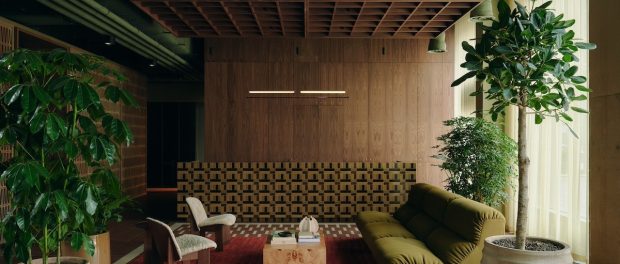
Interior design studio Tabitha Isobel has collaborated with architect and lead designer Studio Multi on Conductor, a 3,400 sqm flexible workspace operated by IWG within URW’s Coppermaker Square development in Stratford, East London. Tabitha Isobel and Studio Multi developed the interior concept and material direction, translating the architecture into a layered workplace environment that blurs the boundaries between hospitality and office design.
At the heart of Conductor is a central atrium flooded with natural light, which became the conceptual starting point for the design teams at Tabitha Isobel and Studio Multi. Conceived as a light-filled sanctuary within its dense urban setting, the design draws on the spatial drama of historic palm courts and the textural intimacy of hospitality environments rather than conventional co-working cues. The colour palette was loosely informed by the copper heritage of the surrounding Coppermaker Works development, with rust, amber and deepened ochre tones guiding the material direction throughout. Planting and filtered light were treated not as decorative additions but as spatial devices, establishing a restrained biophilic sensibility that runs through the project. From bespoke joinery elements including the café counter, reception desk and conversation pit, and library, through to detailed material specification, the interior was carefully developed by Tabitha Isobel and Studio Multi to balance architectural clarity with atmosphere.
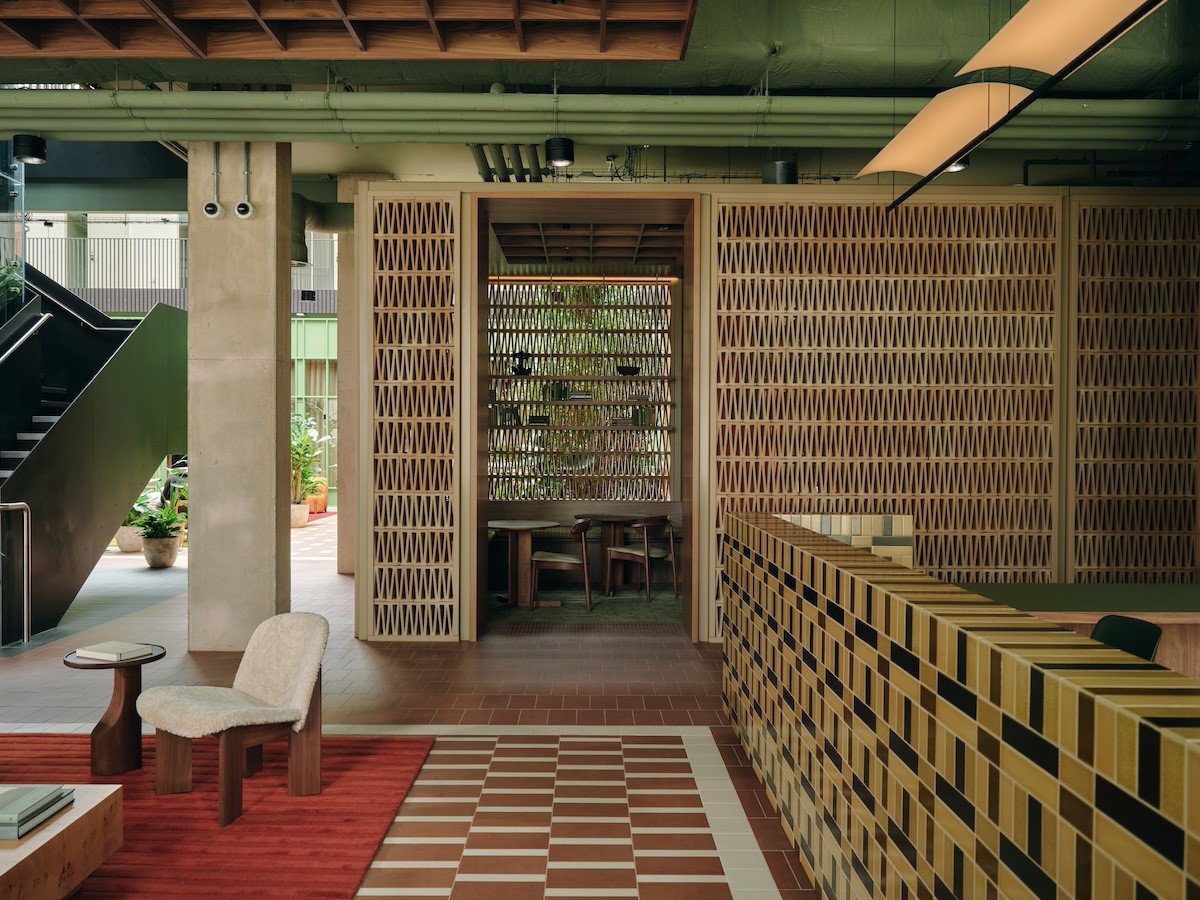
 Upon arrival, the reception immediately establishes the project’s tone. Ceramic floor tiles by Solus in terracotta and warm white are laid in alternating brick and block formations, introducing rhythm underfoot and creating visual movement that plays against the exposed concrete columns and visible services of the base build. The façade of the reception desk is clad in Dzek volcanic ash glazed tiles, arranged in a patchwork of nuanced ochre tones interspersed with a deep brown. The composition introduces tonal depth and a strong graphic language at the threshold, punctuating the warmth of the surrounding terracotta floor. Soft sofas by &Tradition sit alongside lounge chairs by HAY, set over Nordic Knots rugs and paired with burl wood tables by Ferm Living, reinforcing the project’s hospitality-led intent from the outset.
Opposite, the café counter continues this material expression, also clad in a patchwork of volcanic ash glazed tiles. Above, a suspended timber canopy with integrated lighting lowers the perceived height of the café area, softening the geometry of the open plan and creating a more immersive atmosphere within the wider volume. The canopy above the counter is formed from Plasticiet’s recycled solid surface material, introducing a warm, earthy hue and a gentle sheen that shifts under changing light. Seating here is deliberately varied, combining stacking chairs, stools and timber café chairs with walnut tables to support flexibility while maintaining warmth through natural material choices.
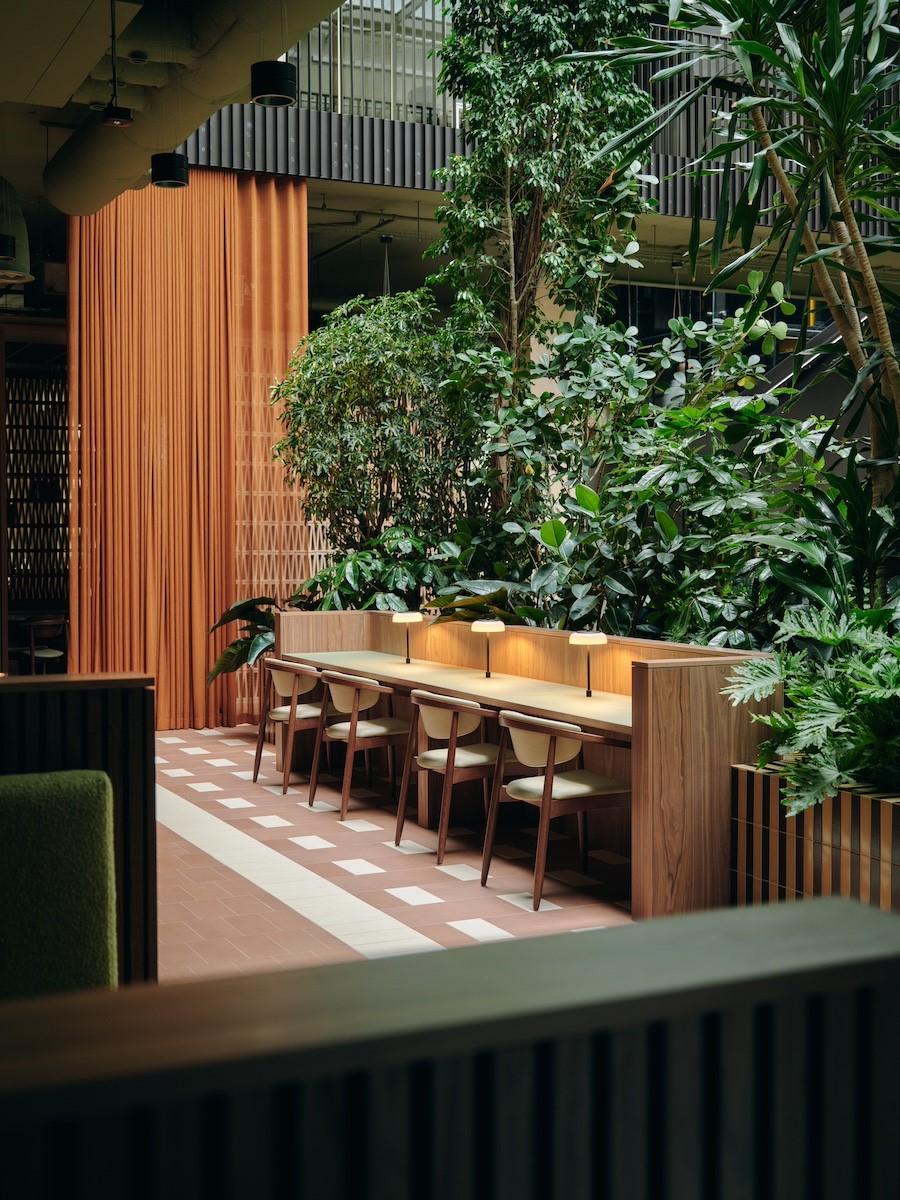
From here, the space opens into the central atrium where scale and light shift dramatically, a move central to the interior strategy. Generous planting rises from bespoke planters clad in Dzek volcanic ash glazed tiles laid in vertical bands of varying green tones, reinforcing the project’s graphic language while drawing the eye upward into the double-height volume. Integrated bench seating wrapped in soft green bouclé by Yarn Collective sits within the planting beds, paired with round walnut café tables and walnut dining chairs. Small &Tradition lamps introduce a warm, domestic glow, softening the exposed concrete columns and visible services overhead. In front of this seating cluster, a breakout area layers vintage timber and leather armchairs with a HAY sofa upholstered in Kvadrat, and a sculptural mid-century table, bringing character and tactility to the atrium floor. Rugs by Nordic Knots anchor the seating here in sage green and nearby in and a rich wine red.
Set directly behind the green bench seating, vibrant orange sofas introduce a more energetic register within the same planted landscape. Paired with a richly textured table, the composition establishes a deliberate dialogue between warmer and cooler tones drawn from the copper- informed palette. Colour, material and orientation distinguish each territory while maintaining visual continuity across the volume.
Overhead, sheer cylindrical pendants float through the double-height space, their diffused glow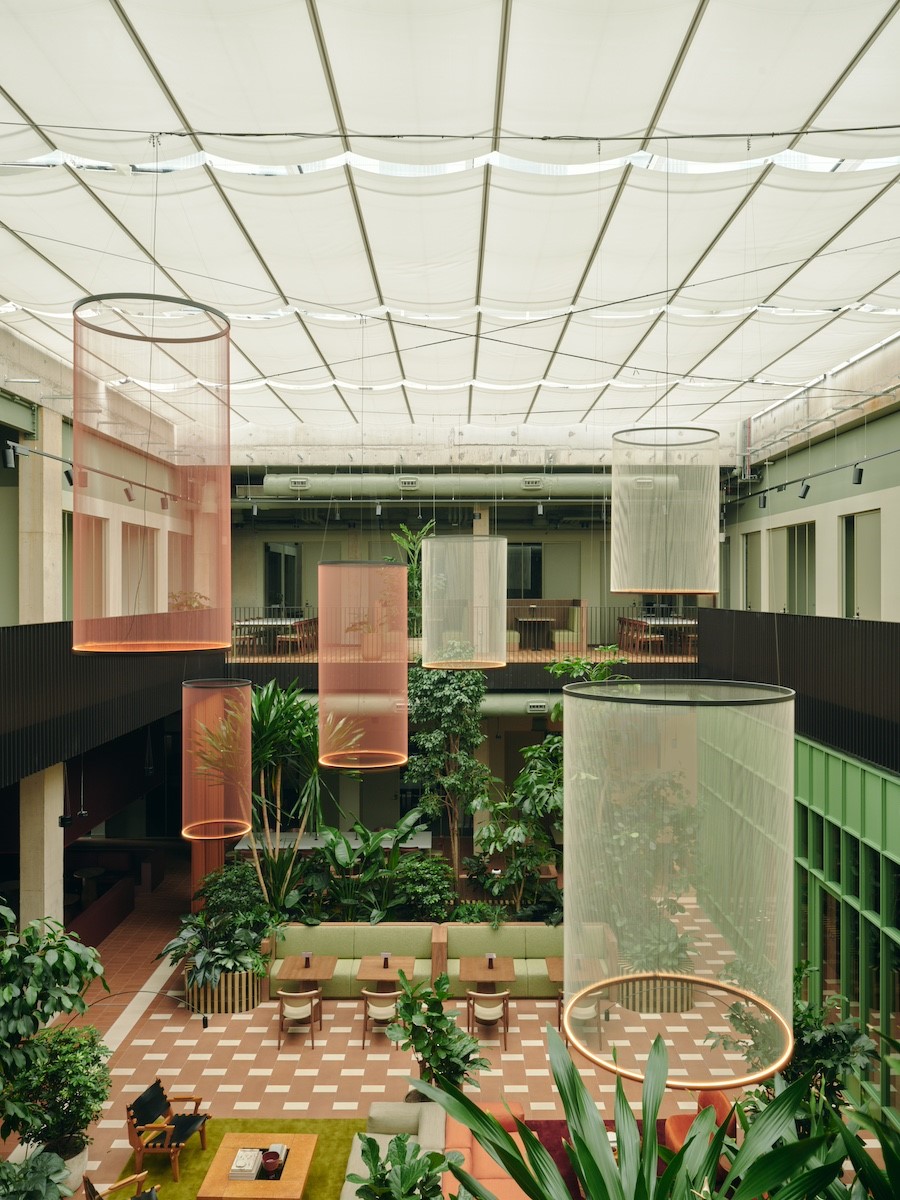 shifting throughout the day. Variations in floor tile formations, including framed compositions that outline seating zones, further articulate the atrium without enclosing it. The contrast between tactile finishes such as bouclé, velvet, timber and ceramic and the exposed concrete structure, visible conduits and steel staircase establishes a considered tension between robustness and refinement. Retractable sail-like blinds span the atrium glazing, helping to diffuse natural light and soften the architecture.
Framing the space, green-painted timber and glazed meeting rooms introduce a strong architectural grid while maintaining permeability into the planted interior. On an adjacent perimeter, a more focused working zone unfolds: a long communal table is paired with timber dining chairs, while an integrated desk runs alongside the planting and is punctuated with Muuto table lamps. A copper- toned sheer curtain filters views and softens this boundary, reinforcing the project’s nuanced material language.
A deliberate shift in scale occurs at the sunken conversation pit, which sits adjacent to the café, where floor level drops beneath a Symphonic Acoustic canopy by Arktura. Upholstered in a deep wine tone by Panaz, the integrated seating forms a cocooned setting for informal meetings and focused work, while carpet by Ege Carpets softens the step-down underfoot. Acoustic performance throughout was carefully resolved through considered material choices, including Troldtekt acoustic panels and sheer curtain partitions by Kvadrat.
Adjacent to the atrium, the library tempers the openness with a more enclosed atmosphere. Celosia terracotta brick by Mutina forms permeable partitions that allow light to filter through while creating visual privacy, casting patterned shadows across the integrated walnut joinery. Built-in bench seating is upholstered in a small-scale green patterned fabric by Sekers, paired with walnut tables and chairs, while muted green carpet tiles by Tarkett soften the space underfoot. Subtle shelving and decorative elements introduce softness without disrupting the architectural clarity of the space. Vintage books in tonal greens, creams and blues, alongside sculptural objects, add a curated layer of warmth. The palette of walnut, moss and clay tones reinforces a distinctly nature-inspired mood, offering a quieter interpretation of the project’s wider material language.
Ascending the steel staircase, the material language shifts underfoot to end-grain oak parquetry by Ted Todd, signalling a quieter register. From the mezzanine, planting below reads as a canopy, maintaining visual connection to the atrium while creating psychological distance from its energy. Upstairs, a series of glazed private offices of varying scale sit alongside back-to-back booths and informal lounge areas, supporting focused work and smaller meetings. Light blue sofas introduce a softer tonal counterpoint to the warmth of the terracotta below. Linoleum flooring from Forbo Marmoleum and carpet tiles by Tarkett extend the project’s material language within these quieter zones.
Throughout the scheme, the interior reflects the teams instinct for multi-dimensional, non- homogeneous spaces, developed in dialogue with Studio Multi’s architectural framework. Rather than imposing a singular aesthetic, the design moves between scale, tone and texture, allowing each zone to hold its own character while remaining part of a cohesive whole. Hospitality references sit comfortably alongside retained industrial elements, and durable contract finishes are balanced with carefully selected furniture and bespoke joinery, a combination that speaks to the studio’s commitment to atmosphere as much as functionality.
On the project, studio founder Tabitha Organ comments: “We wanted people to walk in and be surprised that it was a workplace. The atrium created an opportunity to design something immersive – a space that shifts throughout the day and supports different ways of working. By layering materials, lowering ceilings in certain zones and allowing light to filter through rather than blocking it, we were able to create intimacy without enclosure.”
In the interior design of Conductor, Tabitha Isobel reshapes expectations of the contemporary workspace, offering an environment that is neither neutral nor corporate, but deliberately layered and atmospheric. In doing so, Tabitha Isobel and Studio Multi signal a shift in how we define the workplace; not as a backdrop for productivity, but as an immersive environment where materiality, colour and spatial layering actively shape the experience of work.